
How to Check Criminal History in Queens County
Start by naming the question. A public Queens court case belongs in eCourts WebCriminal and, when a copy or certification is needed, in the Queens court record room. A recent arrest may first appear with NYPD, NYC Department of Correction, or the court after arraignment. A person reviewing their own complete New York record should use DCJS Personal Record Review. Each channel measures a different part of Queens County criminal history.
Gather a full name, date of birth when allowed, spelling variants, and any docket, indictment, NYSID, or book-and-case number already known. Then follow the record rather than assuming one search is complete.
- Search WebCriminal for a public pending or recent court matter and filter for Queens.
- Compare the court, docket number, birth year, charges, and appearance details before treating a name hit as a match.
- Use NYC DOC for current city custody or DOCCS for state imprisonment.
- Ask the proper court record room or NYPD records unit for the underlying document.
- Use fingerprint-based DCJS Personal Record Review for your own state repository record.
For a certified outcome, the Queens Supreme Court clerk offers a certificate of disposition. It is not a substitute for a statewide criminal history search.
Queens Criminal Records Agency Map
Queens County has no county sheriff criminal-records desk, county jail roster, separate county police department, or municipal courts. The NYC Sheriff mainly handles civil enforcement, tax warrants, and evictions. Criminal records are instead split among NYPD, NYC DOC, the New York State Unified Court System, DCJS, and DOCCS. This local structure prevents wasted trips to an office that never held the requested file.
| Record | First official channel | Useful fallback |
|---|---|---|
| Police incident or arrest report | NYPD Records or NYC OpenRecords | Arresting agency for airport or federal matters |
| Criminal court case | WebCriminal | Queens Criminal or Supreme Court record room |
| Current city custody | NYC DOC Person in Custody Lookup | Call the NYC DOC information line |
| State prison custody | DOCCS Incarcerated Lookup | DOCCS lookup instructions |
| Own New York rap sheet | DCJS Personal Record Review | DCJS correction process after receipt |
For NYPD material, the request path depends on the document. A free Verification of Complaint or Aided Report goes through the Criminal Records Unit and returns by mail or email; the unit does not offer public pickup. Arrest reports, body-camera video, logs, and broader datasets belong in a focused NYC OpenRecords FOIL request. A collision report may remain briefly with the precinct before the later DMV route applies. Requests for 911 audio or dispatch data need the exact date, time, location, and incident or call number so the city can identify the responsive record.
Airport incidents add another layer. Port Authority Police may hold a report from JFK or LaGuardia, and a federal case may move through the Eastern District of New York rather than a Queens state court. MTA Police or New York State Police can also create a Queens arrest report within their jurisdiction. The badge agency on the complaint or docket is a better guide than the event's street address alone.
Official New York Background Checks
The New York State Division of Criminal Justice Services Personal Record Review lets a person or that person's attorney obtain a fingerprint-matched New York record. New York does not provide a general-public DCJS name-search portal. A suppressed response leaves out sealed or suppressed material; an unsuppressed response includes all criminal history maintained by DCJS for the requester.
The official DCJS page shown below is the source for eligibility, response choices, timing, and correction instructions.
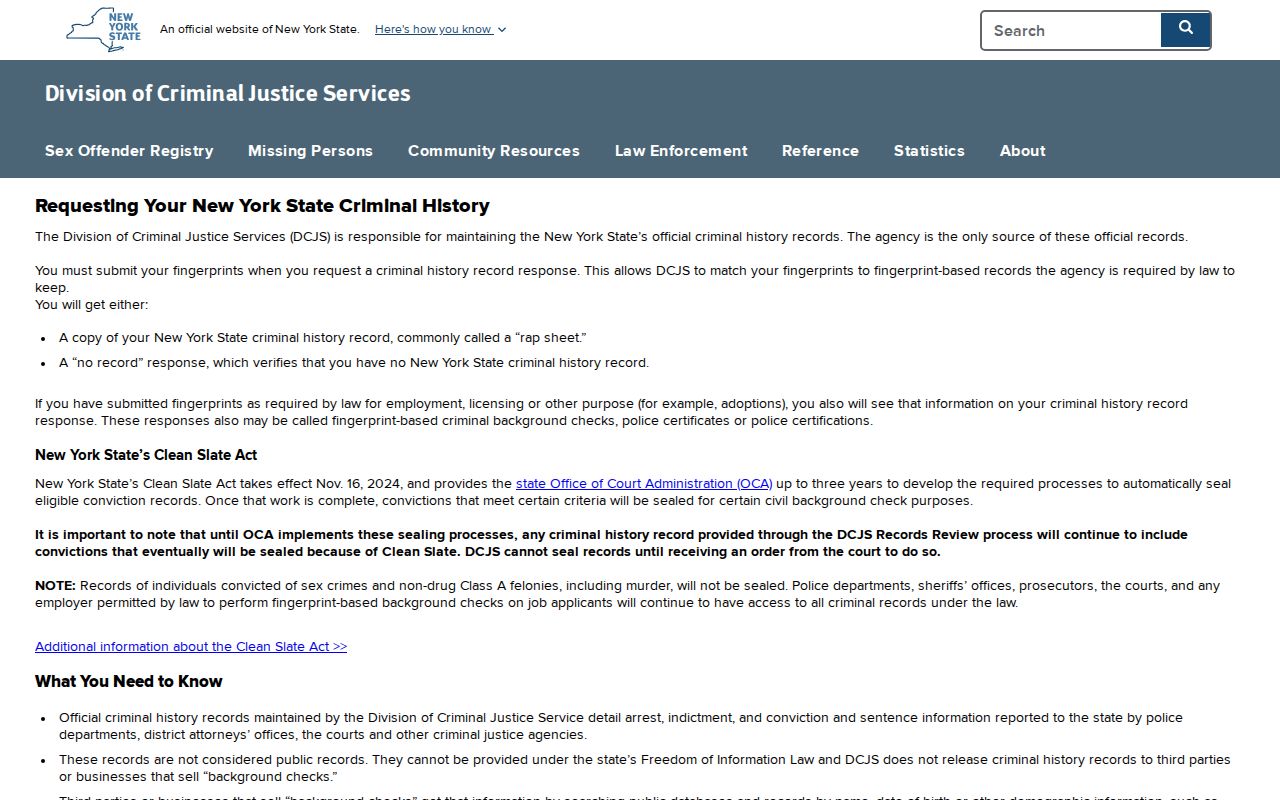
The image underscores the key limit: public court data and a fingerprint-based personal rap sheet are not the same product.
DCJS directs applicants to IdentoGO by IDEMIA. Use service code 15464Z for a suppressed response or 15465F for an unsuppressed response. As of February 2, 2026, the research records a $17.50 fee, one acceptable form of identification, and mail delivery in three to four weeks.
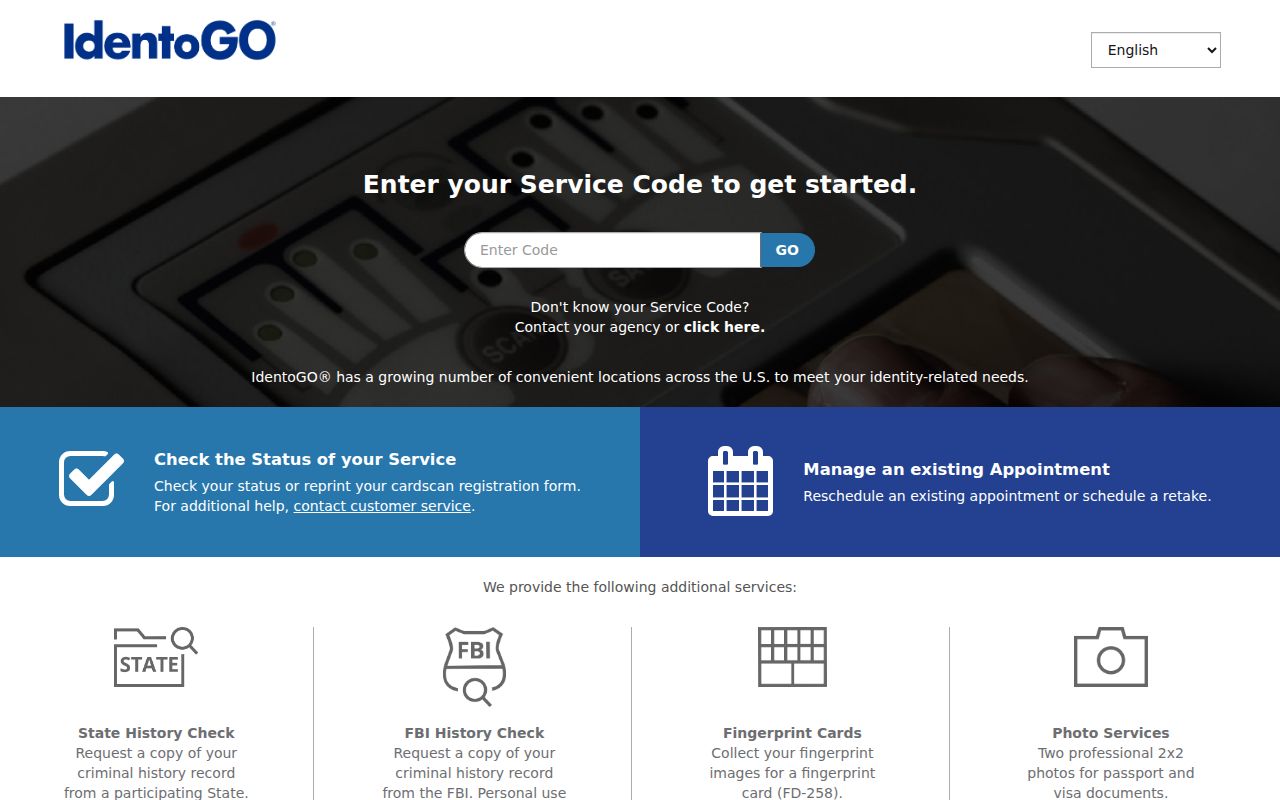
The enrollment screen is the appointment channel, while DCJS remains the agency that prepares the record response.
WebCriminal or Queens Rap Sheet
WebCriminal answers whether a public New York criminal case appears under a defendant name or case identifier. DCJS Personal Record Review answers what fingerprint-supported cycles New York has associated with the person requesting their own record. OCA's paid Criminal History Record Search, or CHRS, is a statewide name search of public court records and is not a DCJS rap sheet.
The Office of Court Administration CHRS page explains its ordering rules and report scope.
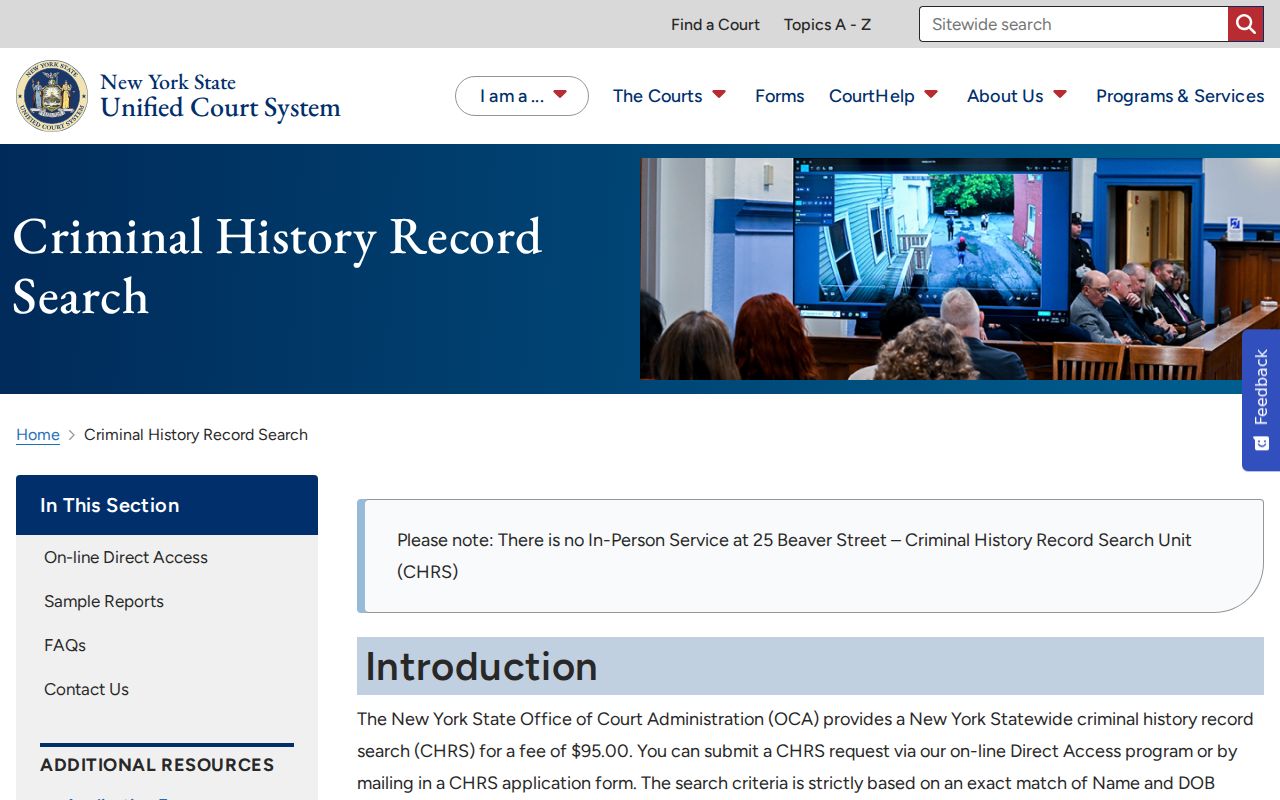
A CHRS result should be matched carefully because it is name based. For a single Queens matter, the docket and court clerk offer more focused case detail.
Types of Criminal Records
A Queens County criminal history may involve several documents created at different moments. NYPD makes complaint, incident, arrest, fingerprint, and related police records. NYC DOC creates booking and custody entries. Prosecutors file accusations, while the courts record appearances, pleas, motions, dispositions, and sentences. DCJS then joins fingerprint-supported arrest cycles with reported outcomes.
- Arrest and police records describe the event and the agency's initial allegations.
- Booking records track city custody, identifiers, housing, and release status.
- Court case files show filed charges, calendars, pleas, decisions, and sentences.
- Warrants arise from judicial orders and require current court confirmation.
- Supervision and registry files follow separate probation, parole, and SORA rules.
A charge can change between arrest and disposition. An arrest is not proof of guilt, and an open-data row is not a conviction record. For the progression from arraignment through sentence, use the Queens County criminal court case file.
New York offense levels also help route the court record. NYC Criminal Court generally retains Class A and B misdemeanors, unclassified misdemeanors, violations, and summons matters. Indicted Class A through E felonies proceed in Queens Supreme Court, Criminal Term. A public result may shorten those classes to AF, BF, CF, DF, EF, AM, BM, UM, V, or I. The code identifies severity, not the outcome. Read the filed statute and disposition before drawing a conclusion from an arrest label. Specialty parts such as Queens Treatment Court and Mental Health Court may change a case's program or supervision path, yet confidential treatment details do not become public just because the docket is accessible.
Kew Gardens Criminal Records Hub
The Queens Criminal Courthouse at 125-01 Queens Boulevard, Kew Gardens, NY 11415 places several record holders in one complex. NYC Criminal Court handles misdemeanors and felony arraignments. Queens Supreme Court, Criminal Term handles indicted felonies. District Attorney, Probation, and Correction functions also operate there. The Supreme Court main Record Room is 718-298-1400, while the Annex Record Room is 718-298-1455. Court hours are generally 9:00 a.m. to 5:00 p.m. on weekdays.
Queens Supreme Court Record Room
125-01 Queens Boulevard
Kew Gardens, NY 11415
718-298-1400
Indicted felony files and dispositions
Annex Record Room
125-01 Queens Boulevard
Kew Gardens, NY 11415
718-298-1455
Annex criminal records
Correspondence Unit
Room E121
125-01 Queens Boulevard
718-298-1319
Mail disposition requests
The clerk lists interpreters at 718-298-1458. Court users who need access accommodations should contact the appropriate ADA coordinator before traveling.
What a Queens County Criminal Record Shows
The fields depend on the source. A court docket can show the court, case number, defendant identifiers, charge statutes, appearance dates, case status, disposition, and sentence. A DCJS rap sheet may join aliases, NYSID, fingerprint-supported arrest cycles, charges, court outcomes, and custody or supervision data. Police and custody systems add their own incident or book-and-case identifiers.
| Name and identifiers | Legal name, aliases, date of birth, NYSID, docket, indictment, or book-and-case number where the system permits. |
|---|---|
| Arrest data | Arrest date, agency, arrest number, fingerprint cycle, and charges alleged at that stage. |
| Filed charges | Offense wording, Penal Law citation, level, and the accusations accepted by the court. |
| Disposition | Dismissal, acquittal, plea, conviction, or other final result reported for the case. |
| Sentence | Jail or prison, probation, fine, conditional discharge, or another court-ordered outcome. |
| Custody or supervision | NYC DOC custody, DOCCS incarceration, probation, parole, or post-release supervision when public. |
Small identifier differences matter in a county with many common names. Match more than a name before relying on a public record.
Queens Inmate Lookup Boundaries
A Queens arrest does not create a Queens-only jail record. NYC DOC operates the Person in Custody Lookup for current city custody, much of it on Rikers Island. Rikers is legally in Bronx County and serves arrests from across New York City, though its road access runs through Queens. Search by book-and-case number, NYSID, or name and date of birth.
The official NYC DOC lookup image documents the city custody route.
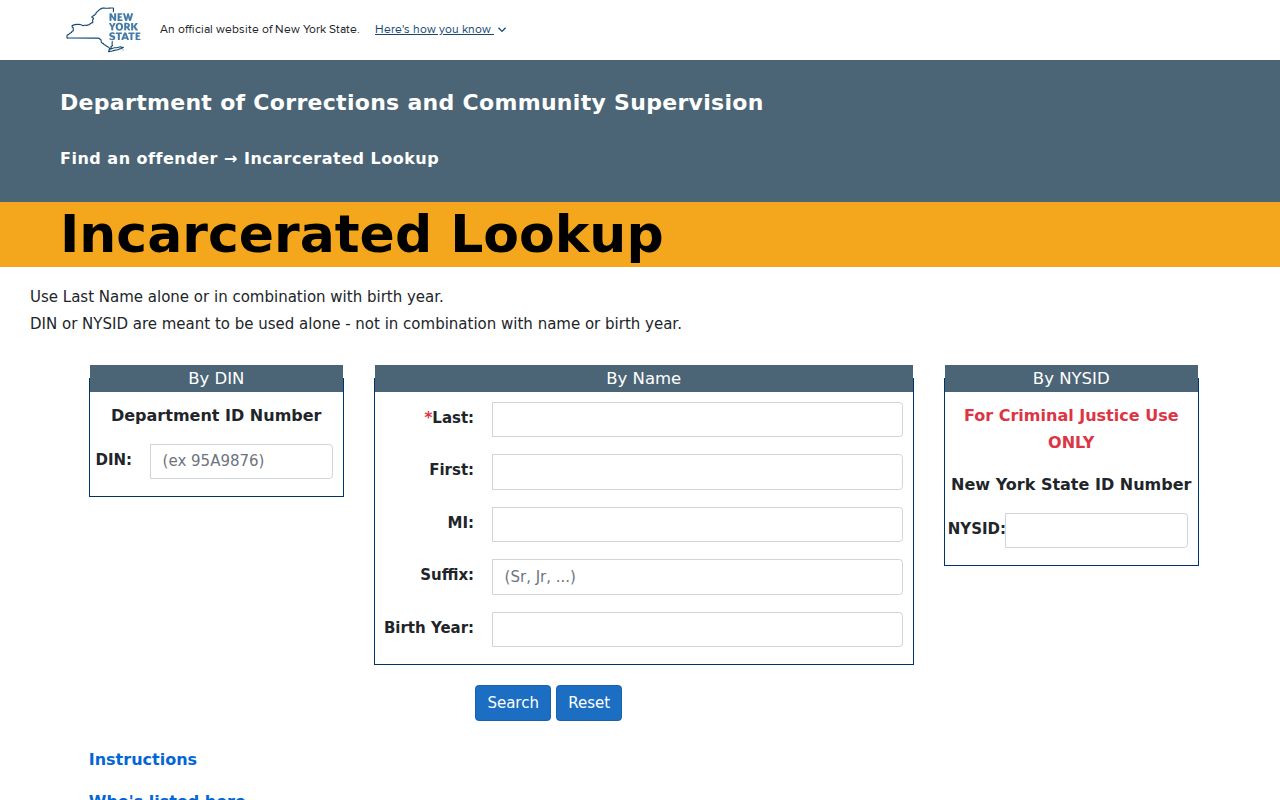
If a state sentence follows, switch to the DOCCS Incarcerated Lookup. Federal custody belongs in the BOP locator. A release from NYC DOC does not erase the related court docket.
Record flow: Arresting agency › NYC Central Booking or DOC › Queens court › DCJS › DOCCS when a state sentence applies.
Public Access Laws
New York's Freedom of Information Law covers agency records but does not guarantee release of every police or criminal-history document. Public Officers Law section 87 permits withholding or redaction for privacy, safety, confidential sources, and interference with enforcement or court proceedings. Court records follow Judiciary Law and court rules rather than the agency FOIL route. DCJS rap sheets have separate dissemination limits.
Key statutes:
Public Officers Law §87 sets agency access rules and exemptions.
CPL 160.50 seals records after a qualifying favorable termination.
CPL 160.57 governs Clean Slate automatic sealing.
CPL 160.59 provides an application route for certain convictions.
Correction Law Article 6-C controls sex offender registration and public dissemination.
For NYPD records, submit a focused request through NYC OpenRecords or use the agency's specific verification and report forms. State the incident, date range, location, precinct, and known report number. A narrow description helps staff locate the correct Queens County record.
Queens Certificate of Disposition
A certificate of disposition is a court-certified statement of the outcome in one case. Queens Supreme Court accepts requests in Room E121 or by mail to Queens Supreme Court, 125-01 Queens Blvd., Kew Gardens, NY 11415, Attention: Correspondence Unit, Room E121. Include the indictment number, defendant name, return address, and payment.
| Item | Queens requirement |
|---|---|
| Certificate fee | $10 |
| Mail payment | U.S. postal money order or bank check payable to SNY Supreme Court Queens County |
| Mail processing | Allow 7 to 10 business days |
| Key identifiers | Indictment number and defendant name |
The product proves that case's disposition. It does not report every New York arrest or case connected to the same person.
Sealed, Expunged and Restricted
New York generally uses the term record sealing. CPL 160.50 addresses qualifying cases that end in the accused person's favor. CPL 160.55 covers certain noncriminal convictions, CPL 160.59 provides application-based sealing for eligible convictions, and CPL 160.57 creates Clean Slate automatic sealing. Youthful-offender records are confidential under a separate rule.
Clean Slate took effect on November 16, 2024, and the Office of Court Administration received up to three years for implementation. DCJS warns that a Personal Record Review may continue to show a conviction until the court's sealing order reaches the repository. Anyone checking their own Queens County criminal history should compare the court disposition with the DCJS response before assuming the record was updated.
If a disposition is missing or wrong, obtain the certified Queens court result and use the correction instructions that arrive with the DCJS record response. The Jamaica NeON office also hosts free NYC Probation Rap Sheet Review workshops for people working through their own records.
Queens County Warrant and Supervision Records
No complete public Queens County warrant list was verified in the official research. WebCriminal may display a bench warrant after a missed court date, but an empty name search does not prove that no warrant exists. Search warrants and some arrest warrants remain sealed before execution. NYPD FOIL is not a real-time warrant clearance tool, and law-enforcement exemptions may protect an active warrant record. A person who missed a Queens appearance should identify the docket and issuing court, contact counsel, and follow the court's instructions. The Queens court FAQ advises contacting counsel and reporting the next business day. An unrelated precinct cannot simply cancel a judicial order.
Probation and parole also live in different systems. The New York City Department of Probation administers local adult and juvenile probation in Queens. Its Jamaica office is at 162-24 Jamaica Avenue, Jamaica, NY 11432, with general inquiries at 718-520-3004. Probation is a sentence imposed by the court. Parole and post-release supervision are administered by DOCCS Community Supervision under the New York State Board of Parole. A public court disposition may identify the sentence, but detailed supervision plans, treatment records, home reports, and protected personal data are not ordinary public case materials.
These terms help separate a court record from a supervision file:
- Bench warrant
- A judge's order commonly issued after nonappearance or noncompliance in the court case.
- Probation
- Community supervision imposed as a Queens court sentence and administered locally by NYC Probation.
- Parole
- Conditional release and community supervision managed by DOCCS after an eligible state prison term.
- Post-release supervision
- A period of DOCCS supervision that follows certain New York prison sentences.
A warrant, probation sentence, or parole status should be confirmed with the authority that controls it. Public docket entries may point toward the right office, yet they do not replace current instructions from the court, NYC Probation, or DOCCS. Live agency confirmation is the safest basis for the next step.
Queens Sex Offender Search Limits
The New York State Sex Offender Registry offers an online directory for Level 2 and Level 3 registrants. Level 1 records are not displayed in that directory. A search for Level 1 information must use the registry hotline at 800-262-3257 and requires enough identifying data. Queens County registry research must account for risk levels, profile fields, registration periods, alerts, and lawful use.
The DCJS registry overview sets out the online and telephone access split.
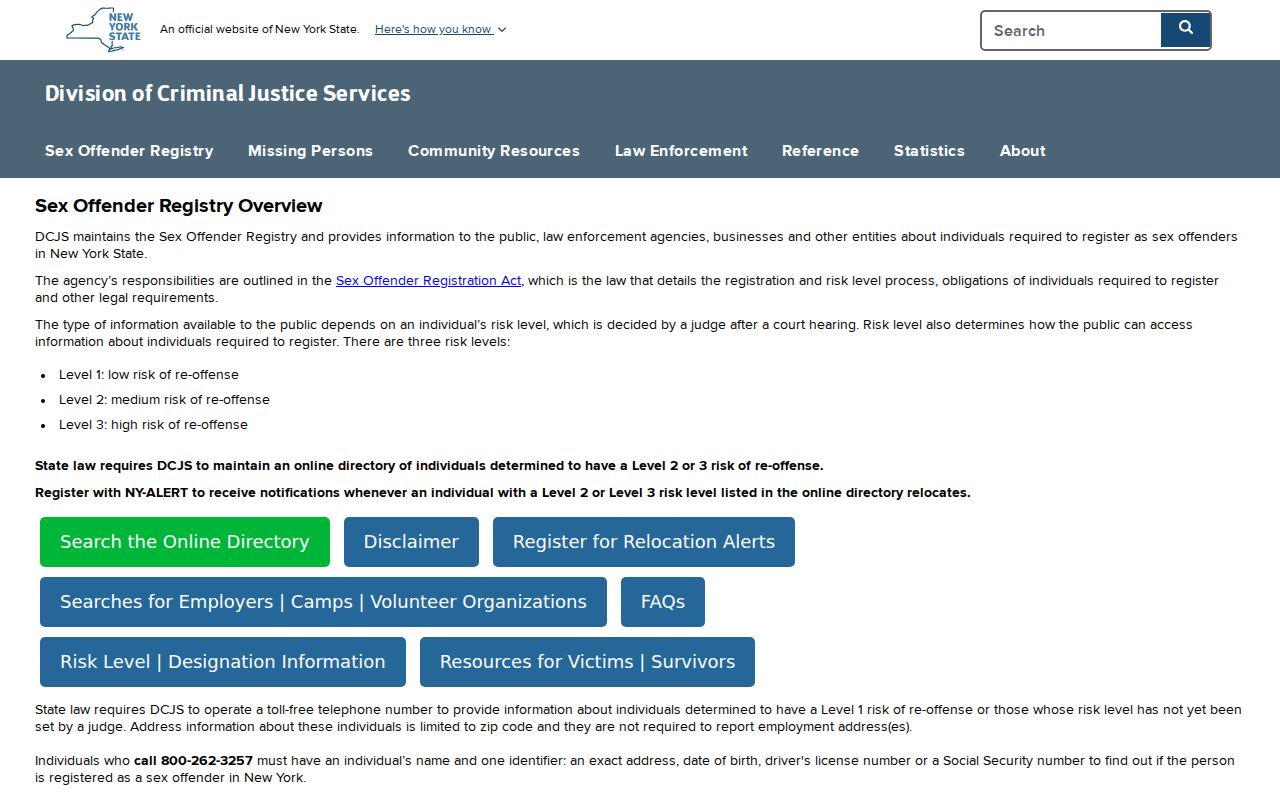
The registry is a specific public-safety source, not a general criminal-history database. NY-Alert can provide relocation notices, while NSOPW adds a national cross-state search.
Criminal Records by City in Queens County
Queens County has one incorporated city: New York City. Jamaica, Flushing, Astoria, Long Island City, Far Rockaway, and other familiar place names are neighborhoods or postal communities, not separate cities with their own police departments or municipal courts. The correct local path remains NYPD, NYC DOC, and New York State courts.
New York City Criminal History
Follow Queens-focused NYPD precinct, report, booking, and court routes without treating neighborhoods as separate cities.
For neighborhood comparisons, filter official NYPD data by Queens borough and precinct. Complaint and arrest counts describe recorded events, not unique people or convictions.